Pediatric Balance Disorder in Lake Charles
You have been told he is just clumsy and that he will grow out of it. Months later you are still the parent standing at the bottom of the slide with your hands out.
What causes pediatric balance disorder?
Balance is not one skill. It is three streams of information, the inner ear, the eyes, and the sensors inside the muscles and joints, all reporting to a brain that has to decide what to do about them. When one stream is unreliable or the response comes too late, a child falls, freezes, or quietly stops trying. The falling is the symptom. The job of an evaluation is to find which part of that loop is not keeping up, because that part changes with therapy and it does not change with waiting.

The vestibular system in the inner ear tells the brain which way is up and how fast the head is moving. When that signal is weak or inconsistent, a child leans on vision instead, which works on a flat floor and fails on grass, on stairs, or in a dark hallway. Repeated ear infections and persistent fluid can affect this system. A therapist can test how much your child is relying on their eyes and retrain the vestibular input directly.
Balance starts at the trunk. If the muscles around the hips and spine tire quickly or switch on late, the body has to be corrected from the outside instead of held steady from the inside. You see it as slumping in a chair, leaning on furniture, sitting on the floor with the legs splayed out behind, or quitting a game early. Strength and endurance work at the trunk often changes standing balance faster than anything done at the feet.
Staying upright is a constant series of small corrections a child should never have to think about. When those automatic reactions arrive late, a stumble becomes a fall because the arms and feet are too slow. Some children can hold a position but cannot organize an unfamiliar movement, so new playground equipment is much harder than the set they already know. Both improve with repeated practice in unpredictable conditions, not with more time on level ground.
Vision carries a large share of the balance load in early childhood. If the eyes do not track smoothly, or the two eyes are not working as a pair, the picture reaching the brain shifts and the body reacts to it. These children often look fine on a still task and struggle the moment they have to move and look at once, like walking while carrying a full cup. It is worth checking.
Every fall teaches a child that an activity is not worth it. So the climbing stops, the bike stays in the garage, and the skill that needed the most practice ends up getting the least. Over a year that gap widens, and a small difference starts to look like a large one. This is the part of the problem that waiting makes worse, and it is also the part that comes back quickly once a child feels safe trying again.
Balance difficulty often sits downstream of something already identified, such as cerebral palsy, a genetic condition, a concussion, or a long hospital stay in infancy. In that case balance work does not replace the rest of the care, it runs alongside it. Our therapists coordinate with the physicians and specialists already involved so you are not managing two separate plans.
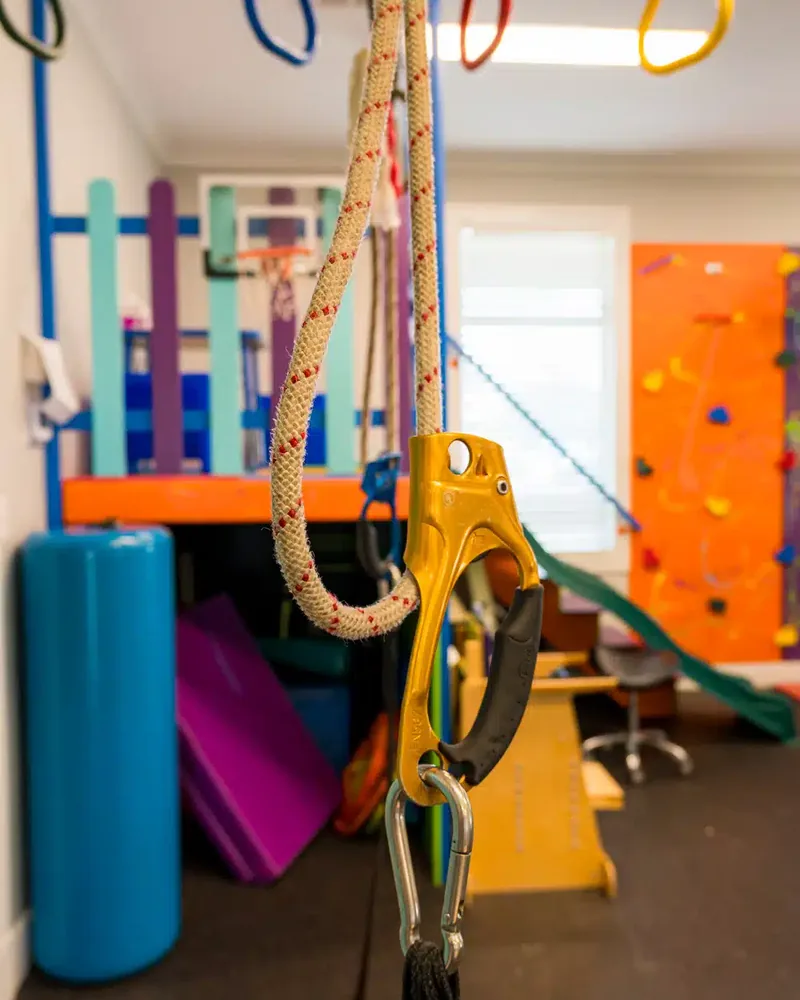
How therapy in Lake Charles helps.
We start by watching your child move, not by reading a checklist. A pediatric evaluation looks at trunk strength, standing and single-leg control, how they handle uneven and unstable surfaces, how much they depend on their eyes, and what happens once they get tired. That is what tells us which system is the weak link, and it is the difference between a plan that works and a generic list of exercises. From there your child works one on one with a therapist in sessions that run 30 to 60 minutes and look like play, because a child who is enjoying themselves will attempt harder things than a child being drilled.
Progress is built in small steps: a wide base before a narrow one, a firm floor before a soft one, standing still before moving and reaching. Most families come two to three times a week for four to six weeks and notice something inside the first few weeks, usually confidence before coordination. Louisiana is a direct access state, so no physician referral is needed to begin physical therapy, and if occupational therapy is the better fit our front office will confirm exactly what your plan requires. That office also verifies your benefits, deductible and visit limits up front, so you know what you will owe before you walk in. If there is no documented improvement within 30 days, we are required to refer back to a physician, and we help arrange that.
What to expect from your child's care.
Evaluation and a clear explanation
The first visit is an assessment, not a workout. We measure strength, postural control, how your child manages uneven surfaces, and how much they lean on vision to stay upright. Then we tell you in plain language what we found and what we think is driving it, so you leave with an answer instead of another instruction to wait.
Graded challenge, one system at a time
Sessions target the weak link, then take away the crutch: narrower stances, softer surfaces, head turns, reaching while walking. We keep the challenge just past comfortable and short of frightening, because that is where the nervous system adapts. You get a short home routine that fits a normal evening.
Carryover into the places it matters
Balance counts on the playground and on the stairs at home, not in a clinic. As control improves we rehearse the situations your child has been avoiding, and we tell you what to keep doing once visits end. We reassess so you can see whether it is working.
Often part of a bigger picture.
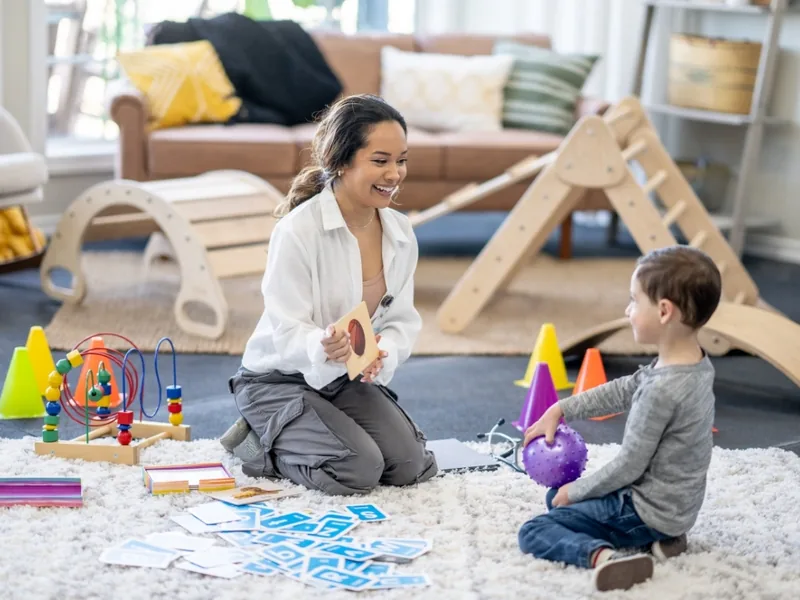
Pediatric Muscle Difficulties
Support for low tone, weakness and the fatigue that stops a child keeping up with their friends.
Learn More →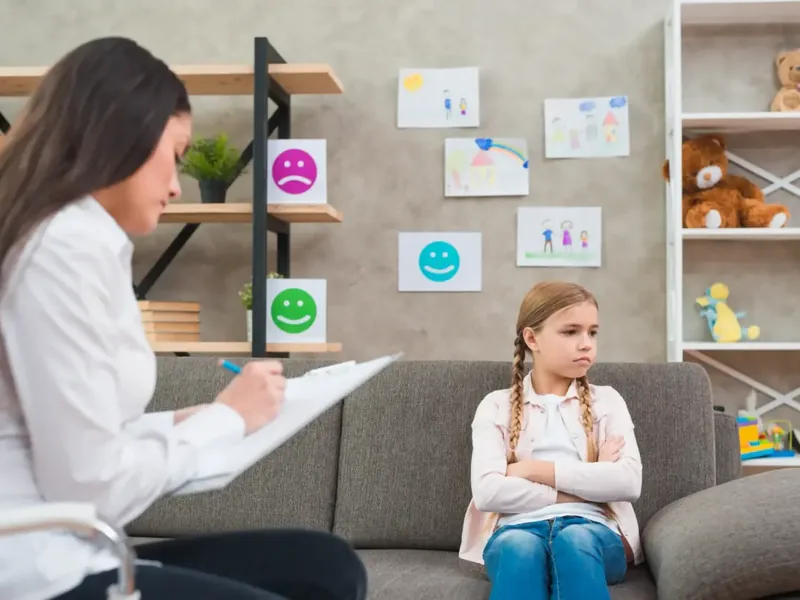
Pediatric Neurological Disorders
Therapy for children with cerebral palsy, developmental delay and other neurological diagnoses.
Learn More →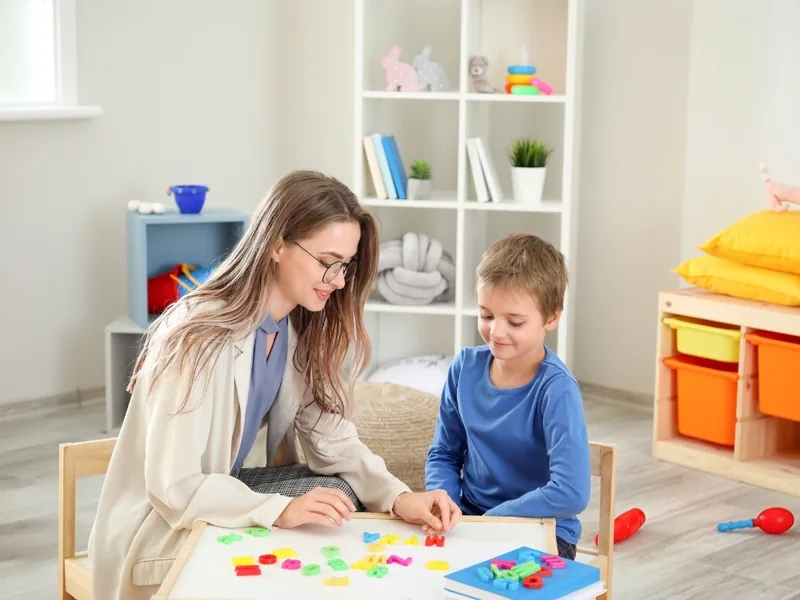
Pediatric Sensory Disorder
Regulation strategies and graded sensory work for a child overwhelmed by sound, touch or movement.
Learn More →