Pediatric Neurological Disorders in Lake Charles
You left the appointment with a diagnosis and a follow-up six months out. Nobody told you what to do on Monday morning.
What causes pediatric neurological disorders?
Pediatric neurological disorder is a category, not a single condition. It covers children whose difficulty with movement, communication or feeding comes from how the brain, spinal cord, nerves or muscles are working rather than from the arms and legs themselves. Some families arrive with a named diagnosis. Many arrive with a delay that has no name yet, and the absence of a label is not a reason to wait. What therapy needs is a clear picture of what your child can do today and what the next step is.
Cerebral palsy comes from an injury or difference in the developing brain, and that part does not change. The body does: strength, tone, joint range, balance, and the ability to complete a task in a way that works. Therapy also heads off the secondary problems, tightness and asymmetry, that build up over years without attention. Progress here is measured in what your child can do, not in a diagnosis going away.
Babies born early often come home with real gaps in movement, feeding and regulation. Early therapy uses a window when the nervous system is at its most responsive, which is why starting at six months beats starting at three years. Our occupational therapists and speech-language pathologists routinely work with infants, feeding included, so families do not have to wait for a delay to become obvious.
Down syndrome, the muscular dystrophies and a long list of rarer genetic conditions each change motor development in their own pattern. The plan has to respect that pattern, including how hard to push and what to protect. This is where coordinating with the physicians already involved is not optional, and where an honest conversation about goals beats a standard protocol.
Many children are behind on motor, speech or feeding milestones with no diagnosis to explain it, and their families get told to wait and see. Waiting costs practice, and practice is what builds skill. An evaluation gives you a baseline and a plan you can start now, and it does not stop anyone from investigating a cause at the same time.
A brain or spinal cord injury, a serious infection, or a seizure disorder can change what a child could do the week before. Recovery in children is real, but it is not automatic. It depends on repetition, on getting the level of challenge right, and on families who know what to do between visits. Rehabilitation after an acquired event is what this clinic is built for.
Neurological conditions change resting muscle tension in both directions. High tone makes movement stiff and range hard to keep. Low tone makes positions hard to hold. Many children have both, in different parts of the body. Range of motion work, positioning, strengthening and, where it fits, taping are matched to the pattern your child actually has, because the wrong approach can make either one worse.
The neurological picture that affects walking often affects the muscles used to eat and to talk. That can look like slow or unclear speech, coughing on thin liquids, a very narrow food range, or a baby who will not gain weight. Our speech-language pathologists and feeding therapists work alongside the motor team, so you are not driving to three clinics with three separate plans.
How therapy in Lake Charles helps.
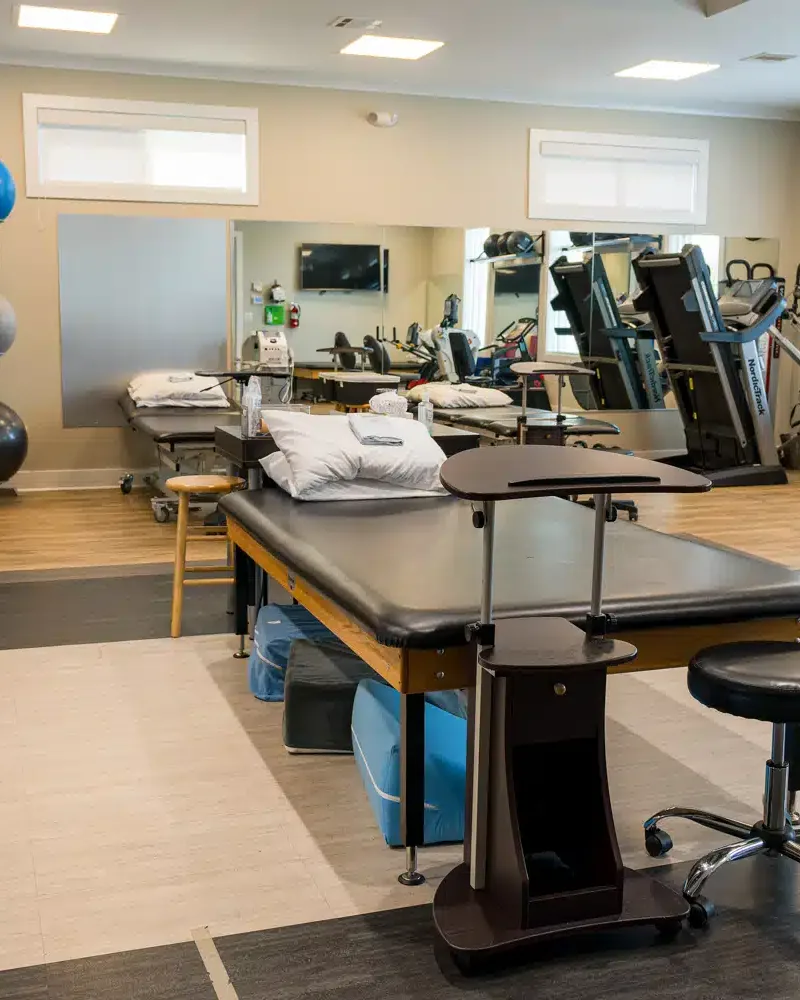
The first job is a clear baseline. A pediatric evaluation looks at tone, strength, range of motion, balance, how your child moves between positions, and where speech or feeding fits into the picture. Because physical, occupational and speech therapy all run out of the same building here, a child who needs two or three disciplines is assessed by a team that talks to each other. Sessions are one on one and run 30 to 60 minutes.
The plan then picks a small number of goals that matter to your family and works them hard, because scattered effort is what makes therapy feel endless. That might be walking further without a rest, getting dressed without help, drinking safely, or being understood by a grandparent on the phone. Most families come two to three times a week for four to six weeks between reassessments, and you will be told plainly what has moved and what has not. Our front office verifies your benefits, deductible and visit limits before the first appointment, tells you what you will owe up front, and confirms exactly what your plan requires by way of a physician referral. Louisiana is a direct access state, so physical therapy can begin without one, and if there is no documented improvement within 30 days we are required to refer back to a physician and will help arrange it.
What to expect from your child's care.
Evaluation and a plan you can hold
The first visit builds a baseline across movement, self-care and communication, and takes in the history and paperwork you already have. You leave with two or three concrete goals and a schedule, not a folder of assessments.
One on one work, coordinated across disciplines
Your child works with the therapists their goals require, and those therapists share notes. Sessions blend hands-on work, strengthening, positioning and practice of the specific tasks you named, with a home routine kept short enough to survive a real week.
Reassess, adjust, plan for the long run
Neurological conditions are managed over years, not weeks. We reassess on a schedule, show you the measurements, adjust the plan, and are direct about when a different service or a physician conversation is the right next step.
We have had a wonderful experience with Hope Therapy in Lafayette. Three of our children are receiving speech therapy there as they prepare for their frenectomy, and we have felt so supported.
Often part of a bigger picture.

Pediatric Muscle Difficulties
Support for low tone, weakness and the fatigue that stops a child keeping up with their friends.
Learn More →
Pediatric Balance Disorder
For the child who trips, freezes on the stairs and has stopped trying the playground.
Learn More →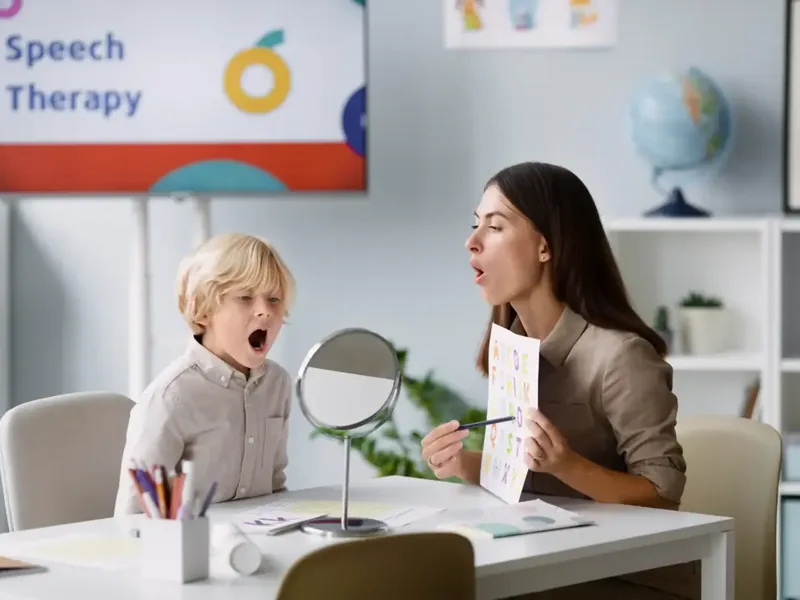
Speech & Sound Disorders
A structured program for unclear speech, sound errors and apraxia, from first words to full sentences.
Learn More →