Stroke Recovery in Lake Charles
Someone told you the recovery window closes after six months. It does not. The brain keeps reorganizing for years, and what it reorganizes around is the work you put in.
What changes after a stroke?
A stroke interrupts blood flow to part of the brain, and the abilities that region controlled are the ones that go offline. That is why no two strokes look alike: one person loses a hand, another loses their balance, another loses the words. Recovery works because the brain can reassign those jobs to healthy tissue, a process that needs specific, repeated, difficult practice to happen. Dr. James Marcantel, PT, DPT, leads neurological rehab here and is LSVT certified, and he works alongside our occupational therapists and speech-language pathologists in the same building.
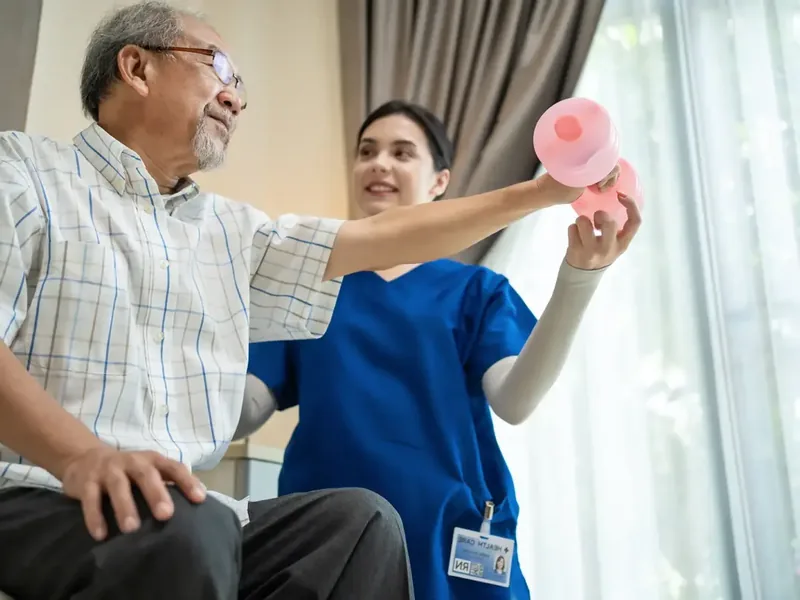
Hemiparesis is the most familiar effect: one arm and leg that will not answer the way they used to. The muscles themselves are usually intact, so the problem is the signal getting to them, not the tissue. Recovery comes from thousands of attempted repetitions that push the brain to find a new route to those muscles, which is why intensity and frequency matter more than gentle exercise.
After a stroke the ankle may not clear the floor, weight may not shift fully onto the affected leg, and the automatic reactions that catch you when you stumble may be slower. The result is a shortened, cautious walk and a real fall risk. Gait retraining works on step length, weight shift, turning and the recovery reactions themselves, not just walking distance.
The arm often recovers more slowly than the leg, because reaching and grasping need finer control and because the arm gets used less in daily life. Occupational therapy targets exactly this: getting the affected hand back into real tasks like dressing, eating and writing, in graded steps, so the brain has a reason to rebuild the pathway.
A stroke can leave the words intact but hard to produce, or leave production intact but comprehension damaged, or weaken the voice to a whisper. Each of those is a different problem with a different plan. Having licensed speech-language pathologists in the same clinic means the speech piece starts in the same week as the walking piece.
Coughing on liquids, food that feels stuck, or a change in how meals feel can all follow a stroke, and an unsafe swallow carries real risk. Swallowing is muscular and it responds to targeted therapy, from strengthening exercises to changes in texture and positioning while strength is rebuilding.
Post-stroke fatigue is not ordinary tiredness. Movements that used to be automatic now take conscious effort, so the whole day costs more. Sessions are paced around that reality, and building stamina is treated as an actual goal rather than something that should just return on its own.
When one side is hard to use, you stop using it, and the brain quietly reallocates that territory to the stronger side. Months later the weakness looks fixed when much of it is disuse. Interrupting that habit early, and deliberately forcing the affected side back into daily tasks, is one of the highest-value things therapy does.

How physical therapy in Lake Charles helps.
Stroke rehab is measurement plus repetition. We start by testing what you can actually do: how far you walk, how fast, how steady on turns, how much the affected arm contributes, how safely you swallow, how clearly you speak. Those numbers become the baseline, and they get retested, so progress is something you can see rather than something you hope for. From there the plan targets the specific losses, and it targets them hard enough to drive change, because the nervous system responds to challenge and not to comfort.
Because physical, occupational and speech therapy all run out of this clinic, your plan can address walking, hand use and communication in the same week without you coordinating three separate offices. Sessions run 30 to 60 minutes, most people attend two to three times a week for four to six weeks between reassessments, and many notice a change within the first few weeks. Louisiana is a direct access state, so you can begin physical therapy without a physician referral, and if there is no documented improvement within 30 days we refer you back to a physician and help arrange it. Our front office verifies your benefits, deductible and visit limits before your first appointment so you know what you will owe up front.
What to expect from your recovery.
Baseline testing and goal setting
We measure walking speed and distance, balance, arm and hand function, and screen speech and swallowing. Then we ask what you want back, in your own words, and translate that into targets we can test. You leave the first visit with numbers and a plan, not a general encouragement to keep moving.
High-repetition, task-specific training
The work is the affected side doing real tasks, over and over, at a difficulty that forces adaptation. Walking on varied surfaces, reaching for objects that matter, standing while doing something else. Caregivers are taught the home program, because what happens between sessions is most of the volume.
Independence and long-term maintenance
As function returns we shift toward the specific things that make home life work: stairs, the car, the kitchen, getting up from the floor. You finish with a maintenance program and clear criteria for when to come back, because gains hold when the training continues.
Recovery rarely travels alone.
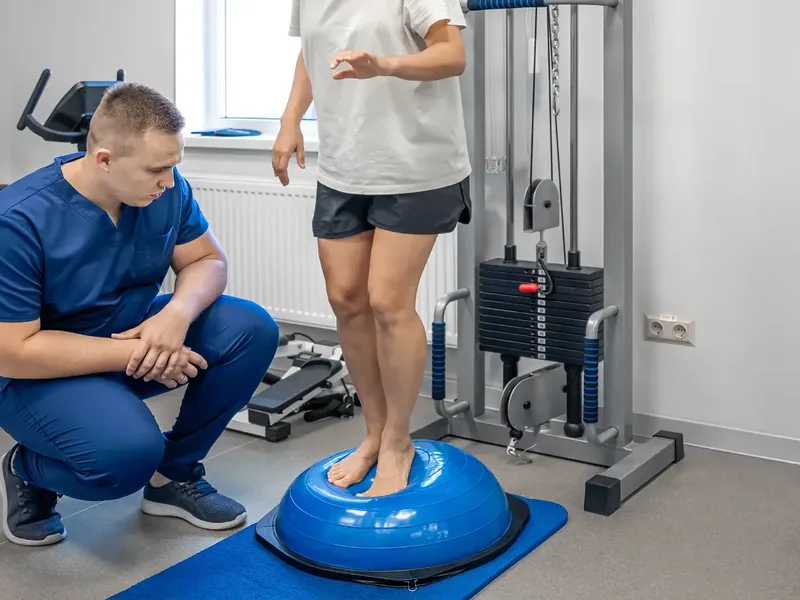
Balance & Gait Disorders
Steadier walking and fewer stumbles through targeted balance, strength and gait retraining.
Learn More →
Parkinson's Disease
Bigger movement, louder voice and steadier walking with LSVT certified neuro rehab.
Learn More →
Swallowing & Feeding Therapy
Safer swallowing and calmer mealtimes for infants, children and adults.
Learn More →