Neurological Rehab in Lake Charles
A stroke, Parkinson's disease or a brain injury changes what your body will do when you ask it. Neurological rehab in Lake Charles retrains that signal, one real task at a time.
What is neurological rehab?
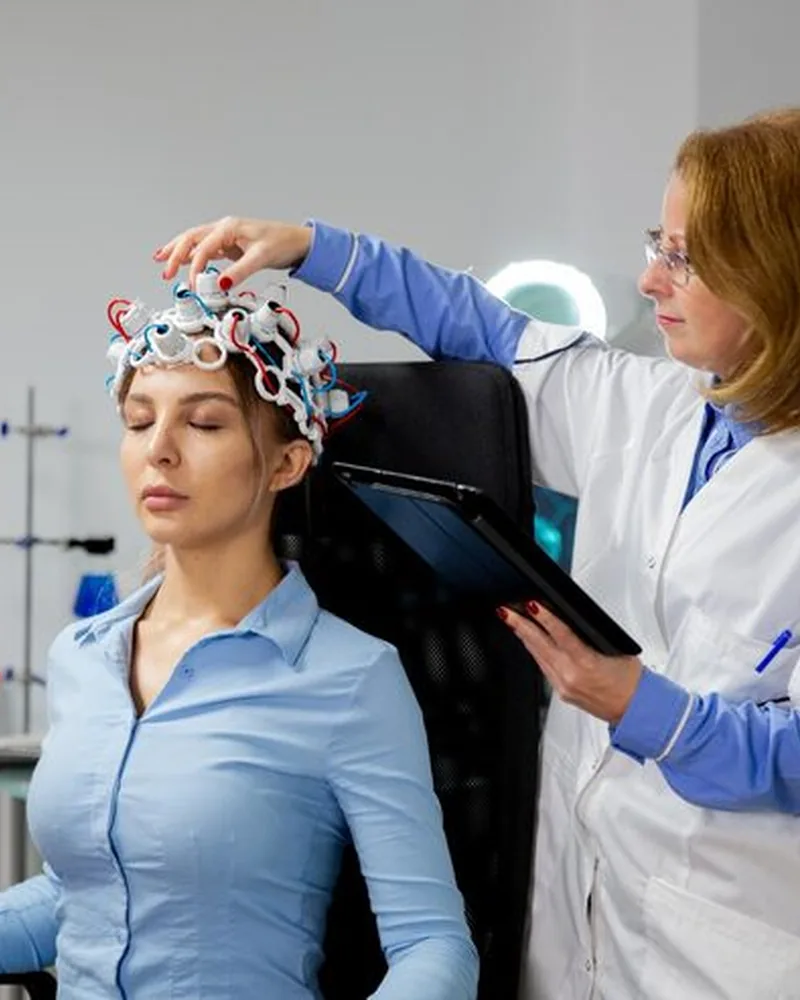
Neurological rehab is physical therapy for a nervous system that has been injured or is changing. When the cause is a stroke, Parkinson's disease, a spinal cord injury or a traumatic brain injury, the muscle is usually not the thing that failed. The instruction to the muscle is. So the work looks different from ordinary strengthening. It is built on repeating the exact task you have lost, at a difficulty your nervous system can still succeed at, often enough that the pathway begins to hold. Standing up from a chair without pushing off the arms. Clearing the toe on the affected side. Turning in a doorway without shuffling. Reaching across your body without losing your balance. At Hope Therapy Center this caseload is led by Dr. James Marcantel, PT, DPT, who earned his degree at LSU Health Sciences New Orleans in 2017 and has been with the clinic since 2018. His focus is stroke, Parkinson's disease, spinal cord injury and traumatic brain injury, and he is LSVT certified, a training built around the large amplitude movement work that helps people with Parkinson's push back against the shrinking step and the quiet voice.
The other half of this work is honesty about the target. Some neurological conditions improve and some are progressive, and the plan has to say out loud which one you are in. Where recovery is possible we chase function you can name: the steps at your back door, the drive to church, dressing yourself without help. Where the condition progresses, the goal is holding ground and staying on your feet safely for as long as possible, which is real work with a real result. Either way you get a full block of one-on-one time with the same therapist, who knows your case from the first visit and does not hand you off between appointments.
Who it's for.
Neurological rehab is worth an evaluation any time the problem is control rather than strength alone. These are the people this program is built for.
Recovering from a stroke
One side no longer answers the way it used to. Walking is slow and guarded, the arm lags behind, and stairs only work with help. The result: task-specific retraining rebuilds the real pattern instead of reinforcing the workaround, so walking, transfers and daily tasks take less assistance.
Living with Parkinson's disease
Your step has gotten shorter, turns feel like they could tip you over, and you have started freezing in doorways. The result: LSVT certified, large amplitude training recalibrates how big a movement has to feel in order to actually be normal size, and balance work makes turning and walking safer.
After a spinal cord or brain injury
Strength, coordination and balance came back unevenly, and nobody has told you what to expect next. The result: a plan built on what you can do today and progressed as you tolerate it, with caregiver training so the gains hold up at home and not just in the clinic.
What to expect in a session.
The first visit is an evaluation, not a workout, and it is long enough to actually understand your case. After that a session runs 30 to 60 minutes, usually two to three times a week for four to six weeks before a formal reassessment.
Evaluation and a goal you can name
Your therapist reviews your history and any hospital or neurologist paperwork you bring, then watches you move: sitting to standing, walking, turning, stepping over an object, reaching. He measures strength, tone, coordination and balance, and screens your fall risk. Then the two of you set the goals in plain language. Not degrees of motion. The thing you want to be able to do again.
Task-specific repetition
The middle of every session is the work itself: guided practice of the movements you have lost, at the hardest level you can still perform correctly, with enough repetitions to matter. Hands-on cueing, gait training, balance challenges and, where it applies, the large amplitude LSVT approach. Every drill has a stated reason, and it gets harder the moment it stops being hard.
Carryover, home and caregivers
A nervous system changes with volume, and the clinic is only a few hours a week. You leave with a home program written for your house and your safety, and if a spouse or family member helps you, we teach them what to cue and what to stop doing for you. Your therapist reassesses regularly and adjusts, so you always know whether the plan is working.
Bring your discharge paperwork, a current medication list, and the cane, walker or brace you actually use, along with the shoes you wear every day. Louisiana is a direct access state, so you do not need a physician referral to start. If your condition has not shown documented improvement within 30 days we are required to refer you back to a physician, and we will help arrange that. Our front office verifies your benefits, deductible and visit limits before your first appointment.
Where to go next.

Stroke Recovery
How we rebuild walking, transfers and use of the affected side after a stroke.
Learn More →
Parkinson's Disease
Large amplitude, LSVT certified training for the shrinking step, the freeze and the unsafe turn.
Learn More →
Vestibular Therapy
When dizziness or an unreliable balance system is part of the neurological picture.
Learn More →