Sports Rehab in Lake Charles
Get back to your sport stronger and more resilient than before your injury. Programs built around your sport, your position, and your return timeline.

What is sports rehab?
Cleared to play is not the same as ready to play, and most athletes find that out the hard way. Sports rehab is physical therapy aimed at that gap. It is delivered by our licensed physical therapists as part of a plan, not as a standalone program, and what makes it different from general rehab is where it ends. General rehab stops when the pain is gone and the range of motion looks normal. Sports rehab keeps going until the tissue tolerates the speed, the direction changes and the repeat exposure your sport actually demands. A lineman driving forward out of a stance, a pitcher decelerating an arm, a distance runner absorbing a few thousand foot strikes: those are different loads, and they need different progressions. Your therapist starts by asking what your sport asks of you, then works backward from that to today.
No plan can guarantee you will not get hurt again, and we will not tell you otherwise. What a good progression does is close the specific gaps that make reinjury likely: the side that is still measurably weaker, the hop you cannot land clean, the movement you brace against without realizing it. Those get tested, not guessed at. Louisiana is a direct access state, so you can start with an evaluation without a physician referral. If you are already under a surgeon's care, we work inside their restrictions and their timeline.
Who it's for.
You do not need a scholarship to qualify. Sports rehab fits anyone whose goal is a specific activity they want back, at the speed they used to do it.
The high school athlete mid season
An ankle rolled in the second quarter, or a hamstring pulled on a sprint. The trainer taped it, the swelling went down, and now there is pressure to get back before the tissue is ready. Your therapist grades the return by what you can demonstrate, not by what week it is. The outcome: a return date backed by strength and hop testing, plus something a coach can actually act on.
Cleared after surgery but not confident
The surgeon signed off, the knee or shoulder looks fine on paper, and you still will not fully trust it. That hesitation is measurable, and it usually tracks a real strength deficit on one side. We find it and close it. The outcome: you stop protecting the limb because the limb has earned it, not because someone told you to relax.
The adult athlete whose old injury keeps returning
You still run, lift, golf or play in a league, and the same calf, shoulder or low back flares every few months. It settles with rest and comes back the moment volume climbs. That pattern is a capacity problem, not bad luck. The outcome: enough tolerance to train at your normal volume without the flare cycle resetting every season.
What to expect in a session.
Sessions run 30 to 60 minutes, one on one with the same licensed physical therapist. The work changes as you progress, but the structure holds.
The evaluation: your sport, then your numbers
The first visit starts with your sport, your position and what you specifically have to do in it, because that is the target the whole plan aims at. Then come measurements: strength side to side, single leg control, range of motion, and how the injured area responds to load right now. Your therapist explains which of those numbers is furthest from where it needs to be and what has to change first. You also get a realistic window, not a guess, and the milestones that will move you through it.
Build tolerance, then build speed
Early sessions are unglamorous on purpose: controlled strength work, motion, and getting the injured tissue used to load again. Once it tolerates that, the work gets faster and less predictable. Change of direction, landing, deceleration, repeated efforts, and the movements your position actually uses. Each stage opens when you have shown you can handle the one before it, not when the calendar says so. If a specific muscle keeps limiting the session, your therapist may add dry needling or kinesio taping to the same visit to make the movement work possible.
Retest, then a plan for staying back
Before you return to full competition your therapist retests the same measures from the evaluation, side to side, so the decision rests on evidence instead of how you feel that day. You leave with a maintenance plan for the in season weeks, when volume goes up and rehab time goes down. Most athletes come two to three times a week for four to six weeks, and many notice a change within the first few weeks. Your therapist reassesses regularly and adjusts, so you always know whether it is working.
Bring your cleats, court shoes or running shoes and clothes you can sprint and cut in, since the later stages are done in your actual footwear. If you have surgical restrictions or a return to play protocol from a surgeon or athletic trainer, bring it. No physician referral is needed to start. Our front office verifies your benefits, deductible and visit limits before your first appointment, so call (337) 478-5880 with your insurance card and we will confirm what your plan covers.
Where to go next.

Sports Injuries
Sprains, strains and overuse injuries, and what the return to play decision actually rests on.
Learn More →
Foot & Ankle Pain
The most common thing that sidelines an athlete, and the loading plan that stops the repeat roll.
Learn More →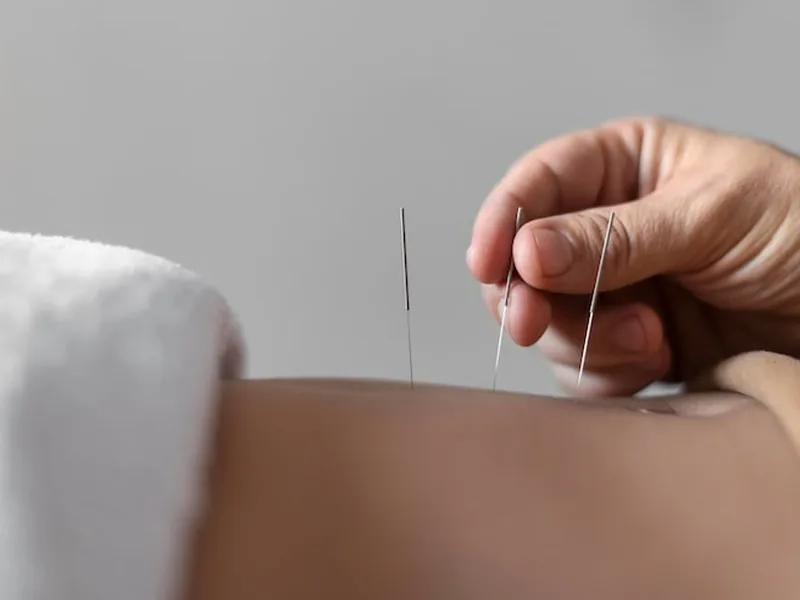
Dry Needling
Often added mid plan when a guarded muscle is the thing keeping you out of the harder work.
Learn More →