Sports Injuries in Lake Charles
You were told to rest it for two weeks. You rested it, you went back, and it went again. Rest removes the pain. It does not rebuild what let the injury happen.
What causes sports injuries?
Sports injuries fall into three broad groups: traumatic events that happen in one instant, overuse injuries that accumulate quietly over weeks, and movement faults that keep putting a joint in a position it cannot defend. They demand different plans. A sprained ankle that gets six weeks of rest and no strength work is the same ankle that rolls again in the first game back, because the injury was treated and the cause was not. Knowing which group you are in, and what specifically failed, is where a real return-to-sport plan begins.
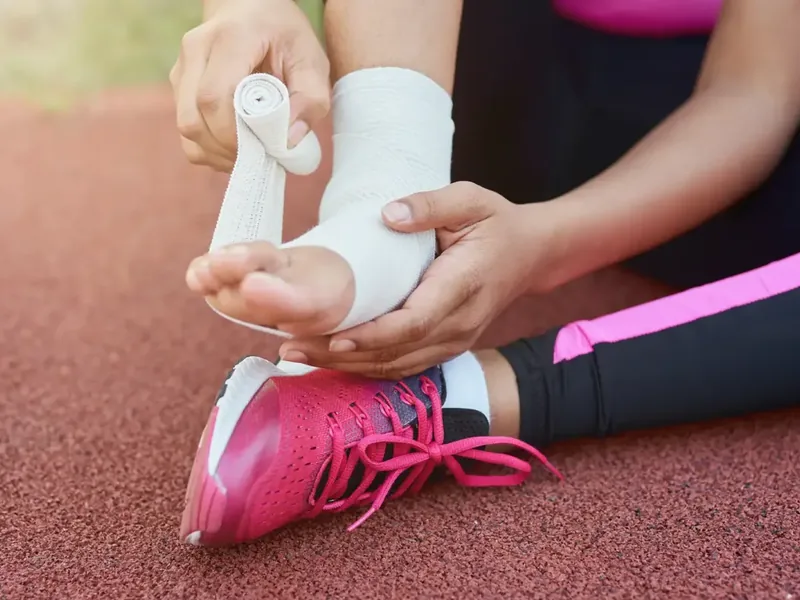
A sprain is a stretched or torn ligament, a strain is the same damage to muscle or tendon, and both usually happen in a single twist, landing or sprint. Loaded correctly and early, this tissue heals stronger than it does under pure rest. Left to settle on its own it heals shorter, weaker and less responsive, which is exactly why old sprains are the best predictor of the next one.
Tissue adapts to stress, but only if there is time between doses. When volume, intensity or frequency climbs faster than the body can rebuild, tendons and bones start to break down instead of building up. Tendinopathy, shin pain and stress reactions all live here. The answer is not simply stopping. It is managing the load while building the capacity that was missing.
Athletes accumulate patterns that quietly load the wrong structures. A runner whose hips drop on each stride sends the force into the knee. A thrower with poor shoulder blade control loads the rotator cuff instead of sharing the work. These faults are visible on assessment and they are trainable, which makes them the highest-value thing to find before you return.
Pain leaves long before capacity comes back. That gap is where re-injury happens, because the joint feels fine walking around and has never been asked to cut, land or sprint since the injury. Return-to-sport criteria exist for this reason: strength compared side to side, single-leg control, hop and landing quality. Meeting the criteria beats waiting out a number of weeks.
Every sport punishes something. Baseball loads the shoulder and elbow in one direction thousands of times. Soccer and basketball demand cutting and deceleration through the knee. Racquet sports build asymmetry into the body by design. Knowing your sport's typical injury pattern lets us train against it deliberately rather than hoping general fitness covers it.
An athlete without the strength, power or endurance the sport asks for is injured on a delay. Late in a game, when fatigue arrives, technique degrades and the tissue that was already near its limit gets exposed. Building the physical qualities the sport demands is both injury prevention and performance work, and they are the same programme.
Growing athletes carry an extra risk, because bones lengthen before muscles and tendons catch up, which leaves growth plates and attachment sites temporarily vulnerable. Knee and heel pain in a teenager mid-growth spurt is common and it is manageable. What it needs is a load plan and honest conversation, not a season written off.

How physical therapy in Lake Charles helps.
We assess the injury and the athlete. That means testing the injured structure, then testing the things around it: strength side to side, single-leg control, hip and ankle range, landing mechanics and the movements your sport actually demands. Those measurements become the criteria you have to meet before returning, so the decision is based on data rather than on how long it has been or how good you feel walking to the car.
The plan then follows the four phases we use across the clinic: Pain, Prime, Perform, Prevent. Pain work brings symptoms down with hands-on treatment, dry needling where it is appropriate and taping to support the area while it settles. Prime restores full range and reloads the healing tissue on purpose so it rebuilds strong. Perform is the part most people skip: heavy strength, then power, then cutting, landing and sport drills at real speed. Prevent closes the gaps the assessment found, so you go back different from the athlete who got hurt. Sessions run 30 to 60 minutes, most athletes attend two to three times a week for four to six weeks between reassessments, and many notice a change within the first few weeks. Louisiana is a direct access state, so you can start without a physician referral, and our front office verifies your benefits, deductible and visit limits before your first appointment so you know what you will owe up front.
What to expect from your recovery.
Assessment and return criteria
We examine the injured tissue, test strength and control against the uninjured side, and watch the movements your sport requires. Then we set the specific numbers you need to hit before going back, and give you a realistic timeline. You leave knowing what failed and what the plan is.
Settle it, then load it
Early work reduces pain and swelling and restores range, using hands-on treatment, dry needling where appropriate and taping for support. From there we load the healing tissue deliberately and progressively, because tendon and ligament only rebuild strength in response to being asked for it.
Power, sport drills and a tested return
Strength becomes power, then agility, then the cutting, landing and sprinting your sport demands, at full speed under fatigue. We retest against the criteria set on day one, close the gaps that caused the injury, and send you back with a maintenance plan rather than a hope.
Pain rarely travels alone.
Hip & Knee Pain
Hip and knee pain treated at the source, with strength and mechanics work that holds up under load.
Learn More →
Foot & Ankle Pain
Sprains, heel pain and tendon problems rebuilt from the ground up so they stop coming back.
Learn More →
Back Pain & Sciatica
Find the driver of your low back and leg pain, then unload it, retrain it and keep it from returning.
Learn More →