Dizziness & Vertigo Treatment in Lake Charles
Spinning sensation or constant lightheadedness paralyzes your daily life. Most dizziness responds well to targeted therapy that retrains your vestibular system.
What causes dizziness and vertigo?
Dizziness and vertigo come from disruption in your vestibular system, the inner ear structures that tell your brain which way is up. They also come from vision problems, neck tension, or coordination issues. Identifying the source is critical because the treatment is different for each cause. Most respond well to physical therapy.

Tiny calcium crystals in your inner ear normally stay put. When they get dislodged, your brain gets a false signal that you are spinning. Certain head movements trigger violent spinning. The good news is that BPPV responds extremely well to repositioning maneuvers, often with relief in a single session. It is one of the most satisfying conditions to treat precisely because the fix can be so fast once the affected canal is identified.
Sometimes the nerve that connects your inner ear to your brain becomes inflamed, usually from a virus. This causes severe vertigo that can last days or weeks. Recovery usually happens on its own, but physical therapy can accelerate it and prevent complications. Without guided movement during recovery, the brain can develop compensation patterns that leave lingering unsteadiness long after the initial inflammation resolves.
The nerves and joints in your neck send constant position updates to your brain. When the neck is stiff, misaligned, or inflamed, these signals get confused. The result is dizziness that often comes with head turning or certain neck positions. Treating the neck often fixes the dizziness.
Dizziness can be part of a migraine even when no headache shows up with it. The nervous system is running hyperresponsive, so busy visual environments, screens, or a supermarket aisle can set off a wave of unsteadiness. Managing the triggers matters, but so does rebuilding tolerance, and that is done by exposing the system to controlled versions of those triggers in small, repeatable doses. Over time the threshold rises and ordinary environments stop feeling hostile.
A concussion can scramble both the vestibular system and the connections in your brain that process balance and movement. People often describe feeling a half-step behind the world, especially with quick head turns or busy rooms. Recovery takes structured therapy that reintroduces those exact movements in a graded way, rather than waiting it out in a dark room. Rest has its place in the first days, but prolonged avoidance tends to extend the symptoms rather than settle them.
Some dizziness is not coming from the inner ear at all. If your blood pressure drops when you stand, the lightheadedness arrives a few seconds after the position change and often clears just as quickly. Part of a good evaluation is separating this pattern from true vertigo, because the two look similar from the outside and need very different plans. If we see signs that your symptoms are cardiovascular or medication related, we tell you and coordinate a referral rather than treating around it.
How physical therapy in Lake Charles helps.
Vestibular therapy targets the specific source of your dizziness. If it is BPPV, we perform repositioning maneuvers that move the crystals back into place. If it is vestibular neuritis, we use progressive exercises to retrain your brain to handle conflicting signals from your ears. If it is cervicogenic, we address the neck dysfunction. The common thread is that we gradually challenge your vestibular system with controlled movements, starting easy and building to real-world demands. You learn which movements trigger symptoms and which do not. You become desensitized to those triggers through repeated, safe exposure. The spinning sensation fades as your brain stops misinterpreting the signals. Most people see significant improvement within a few weeks of targeted vestibular therapy.
Getting an accurate diagnosis first is what makes this approach effective, since treating the wrong cause can leave symptoms unchanged or make them harder to pin down later. That is why the first visit focuses heavily on identifying exactly which system is misfiring before any exercises begin. Many people also carry compensatory habits, like avoiding certain head positions, that keep limiting their life long after the original episode has passed. Part of the work is gently undoing those habits so you regain full, unguarded movement rather than just tolerating symptoms at a lower level.
You do not need a physician referral to get started. Louisiana is a direct access state, so you can book an evaluation with a licensed physical therapist here, and if your symptoms have not shown documented improvement within 30 days we are required to refer you back to a physician and will help arrange it. Our front office verifies your specific benefits, deductible and visit limits before your first appointment, so you know what you will owe before you walk in. Sessions run 30 to 60 minutes. Many people attend two to three visits a week for four to six weeks, though positional vertigo can settle far faster than that once the affected canal is identified.
What to expect from your recovery.
Assessment and symptom trigger identification
We perform specific tests to identify the cause of your dizziness and find what movements trigger it. Pinpointing the exact trigger early is often the difference between a fast recovery and months of guesswork.
Progressive vestibular retraining
We introduce controlled movements that trigger dizziness but stop short of overwhelming you. Repeated, safe exposure to these movements tells your nervous system the sensation is not dangerous. Dizziness decreases with each session. This part can feel uncomfortable in the moment, but it is exactly how the brain relearns to trust movement again.
Return to unrestricted movement and life
As symptoms resolve, you progress to complex movements and real-world activities. You leave confident that dizziness is not controlling your life anymore. That includes the everyday moments, like turning quickly to check traffic or looking up on a ladder, that dizziness had quietly taken away.
Dizziness rarely arrives on its own.
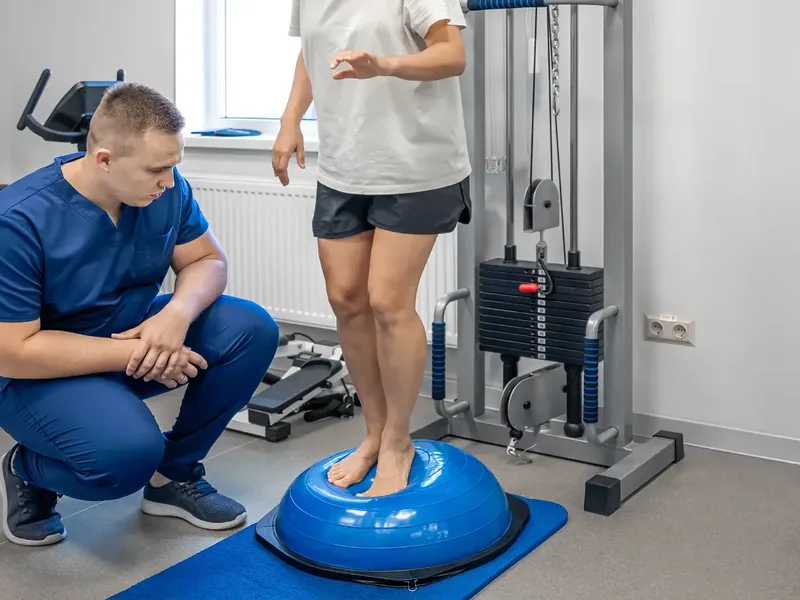
Balance & Gait Disorders
When unsteadiness outlasts the spinning, balance and gait retraining rebuilds the ground under you.
Learn More →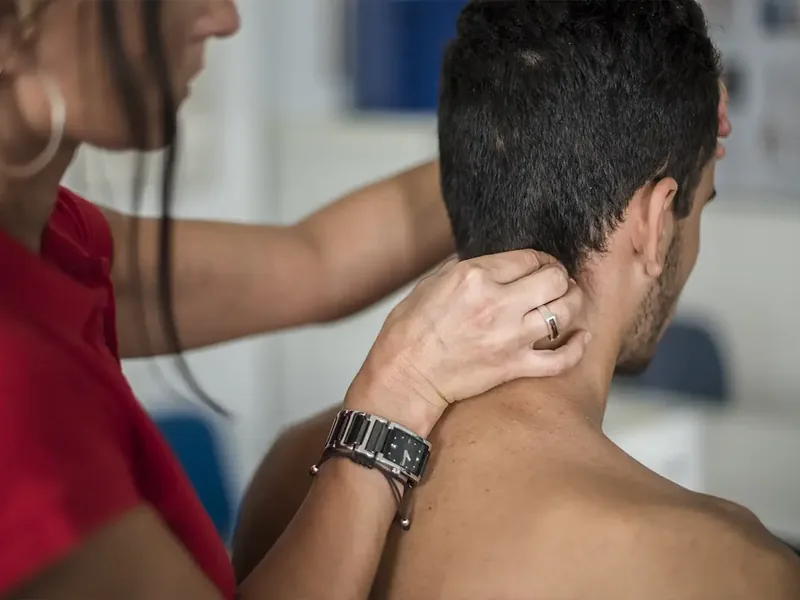
Neck Pain
A stiff neck can be the real source of dizziness. Treating the joints often settles both.
Learn More →
Stroke Recovery
Balance, walking and coordination work after a stroke, guided by our neuro-focused therapists.
Learn More →